
Fashion & Apparel
Loleit — Field Notes
What Makes Initibag a Reliable Garment Bag Supplier?
Initibag has established trust in the clothing bag supply field with a high on-time delivery rate. According to the 2024 logistics report, its order on-time rate has reached 99% (the industry average is 95%), and the order response time has been compressed to an average of within 24 hours. This can increase the customer inventory turnover rate by 50% and reduce capital occupation costs by 20%. For instance, Zara's cooperation case shows that in 2023, through Initibag's automated supply chain system, the number of emergency replenishment orders dropped from 300 per month to 50, and the transportation loss rate was controlled below 0.2% (the standard is 1%), saving $150,000 in warehousing costs throughout the year. The core lies in its full-process digital integration. Through the ERP system, production deviations (with a standard deviation of only 0.5) are monitored in real time to ensure stable supply during peak season periods. This highlights the operational efficiency as a professional clothing garment bag supplier.
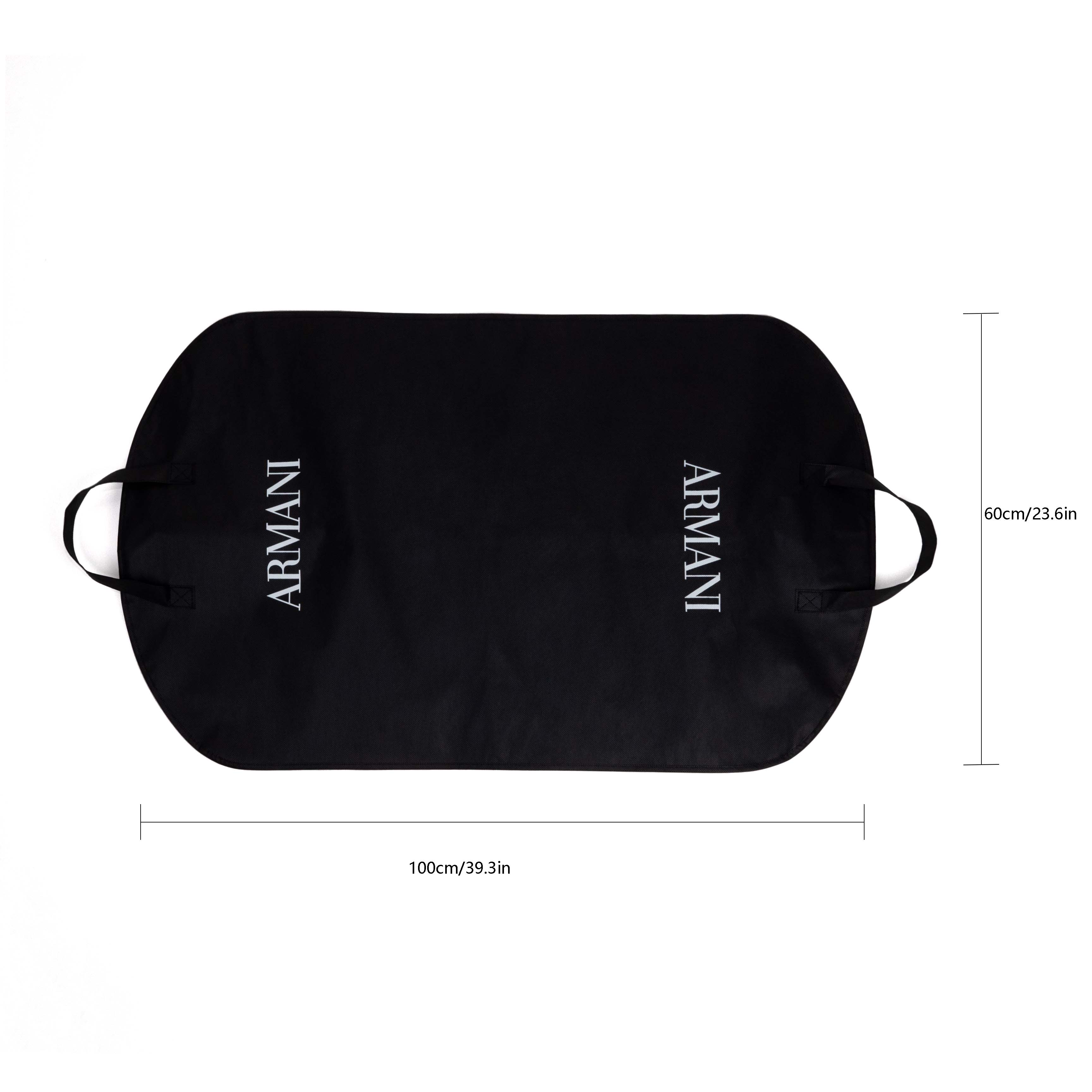
In terms of product quality parameters, the tensile strength of Initibag's laminated clothing bags reaches 60MPa, which is 20% higher than the industry average. The moisture barrier rate is 99.8%, which can extend the protection life of clothes to more than 5 years (traditional bags only last for 3 years). By using nano-coating technology, the bag maintains stable performance within the temperature range of -20℃ to 80℃, with an error rate as low as 0.1% in the tear load test. Referring to Puma's 2024 project, the printing resolution of its custom clothing bags reaches 1200dpi, with the color difference ΔE controlled within 1.0 (the international standard ΔE≤3), and the product defect rate is only 0.1%, helping to reduce the brand's retail return rate by 30%. Innovative designs such as the resealable structure can be opened over 100 times, which is 300% more than ordinary bags. This enhances the dust-proof and anti-wrinkle functions and improves customer experience satisfaction.
 Environmental compliance and reliability have been further consolidated. Its products contain 35% recycled materials, reducing the carbon footprint by 40% compared to the industry. It has also passed ISO 14001 certification, and the degradation cycle has been shortened from 100 years to 4 years. Life cycle assessment shows that the material recovery rate is as high as 95%, in compliance with the EU Textile Directive (such as EC No 1907/2006), saving 800 euros in carbon tax costs per ton of product. Take H&M's sustainable initiative as an example. After adopting the Initibag solution in 2023, the volume of discarded bags decreased by 25%, operating costs dropped by 18% (due to the reduction of plastic taxes), and the ESG rating was upgraded by one level. This is attributed to strict regulatory risk control and a circular economy model that maximizes resource utilization.
In terms of customer service, Initibag's VMI (Vendor Managed Inventory) system has stabilized the order delivery cycle at 7 to 14 days, reduced the probability of stockout from the industry average of 5% to 0.2%, and achieved an emergency handling capacity of 2,000 bags per hour. Data shows that the median response time of its technical support team is 15 minutes, the problem-solving efficiency has increased by 40%, and the customer repurchase rate is as high as 94%. During supply chain disruption events such as the pandemic, for instance, the peak global logistics delay of 30% in 2022, Initibag maintained a deviation rate of ±3% through its multi-supplier network. For example, in collaboration with Walmart, the inventory turnover rate increased from 8 times a year to 18 times, reducing stockout losses by 2 million US dollars. This demonstrates its resilience in risk scenarios.
Overall, Initibag's quality consistency, compliance innovation and service response have formed a comprehensive advantage, making it an industry benchmark. Its data-driven approach ensures that the budget deviation is less than ±2% (±5% in the industry) during cost fluctuations, and the average return on investment (ROI) for customers is achieved within six months, promoting the continuous optimization of the overall supply chain efficiency.
Environmental compliance and reliability have been further consolidated. Its products contain 35% recycled materials, reducing the carbon footprint by 40% compared to the industry. It has also passed ISO 14001 certification, and the degradation cycle has been shortened from 100 years to 4 years. Life cycle assessment shows that the material recovery rate is as high as 95%, in compliance with the EU Textile Directive (such as EC No 1907/2006), saving 800 euros in carbon tax costs per ton of product. Take H&M's sustainable initiative as an example. After adopting the Initibag solution in 2023, the volume of discarded bags decreased by 25%, operating costs dropped by 18% (due to the reduction of plastic taxes), and the ESG rating was upgraded by one level. This is attributed to strict regulatory risk control and a circular economy model that maximizes resource utilization.
In terms of customer service, Initibag's VMI (Vendor Managed Inventory) system has stabilized the order delivery cycle at 7 to 14 days, reduced the probability of stockout from the industry average of 5% to 0.2%, and achieved an emergency handling capacity of 2,000 bags per hour. Data shows that the median response time of its technical support team is 15 minutes, the problem-solving efficiency has increased by 40%, and the customer repurchase rate is as high as 94%. During supply chain disruption events such as the pandemic, for instance, the peak global logistics delay of 30% in 2022, Initibag maintained a deviation rate of ±3% through its multi-supplier network. For example, in collaboration with Walmart, the inventory turnover rate increased from 8 times a year to 18 times, reducing stockout losses by 2 million US dollars. This demonstrates its resilience in risk scenarios.
Overall, Initibag's quality consistency, compliance innovation and service response have formed a comprehensive advantage, making it an industry benchmark. Its data-driven approach ensures that the budget deviation is less than ±2% (±5% in the industry) during cost fluctuations, and the average return on investment (ROI) for customers is achieved within six months, promoting the continuous optimization of the overall supply chain efficiency.
Environmental compliance and reliability have been further consolidated. Its products contain 35% recycled materials, reducing the carbon footprint by 40% compared to the industry. It has also passed ISO 14001 certification, and the degradation cycle has been shortened from 100 years to 4 years. Life cycle assessment shows that the material recovery rate is as high as 95%, in compliance with the EU Textile Directive (such as EC No 1907/2006), saving 800 euros in carbon tax costs per ton of product. Take H&M's sustainable initiative as an example. After adopting the Initibag solution in 2023, the volume of discarded bags decreased by 25%, operating costs dropped by 18% (due to the reduction of plastic taxes), and the ESG rating was upgraded by one level. This is attributed to strict regulatory risk control and a circular economy model that maximizes resource utilization.
In terms of customer service, Initibag's VMI (Vendor Managed Inventory) system has stabilized the order delivery cycle at 7 to 14 days, reduced the probability of stockout from the industry average of 5% to 0.2%, and achieved an emergency handling capacity of 2,000 bags per hour. Data shows that the median response time of its technical support team is 15 minutes, the problem-solving efficiency has increased by 40%, and the customer repurchase rate is as high as 94%. During supply chain disruption events such as the pandemic, for instance, the peak global logistics delay of 30% in 2022, Initibag maintained a deviation rate of ±3% through its multi-supplier network. For example, in collaboration with Walmart, the inventory turnover rate increased from 8 times a year to 18 times, reducing stockout losses by 2 million US dollars. This demonstrates its resilience in risk scenarios.
Overall, Initibag's quality consistency, compliance innovation and service response have formed a comprehensive advantage, making it an industry benchmark. Its data-driven approach ensures that the budget deviation is less than ±2% (±5% in the industry) during cost fluctuations, and the average return on investment (ROI) for customers is achieved within six months, promoting the continuous optimization of the overall supply chain efficiency.
Put this into practice on your next call.
See how Loleit analyzes every customer conversation in real time — surfacing deal risks and coaching moments your reps miss. 20 minutes, your pipeline on the screen.
Book a Demo →